Layered Security, from Hardware to Runtime
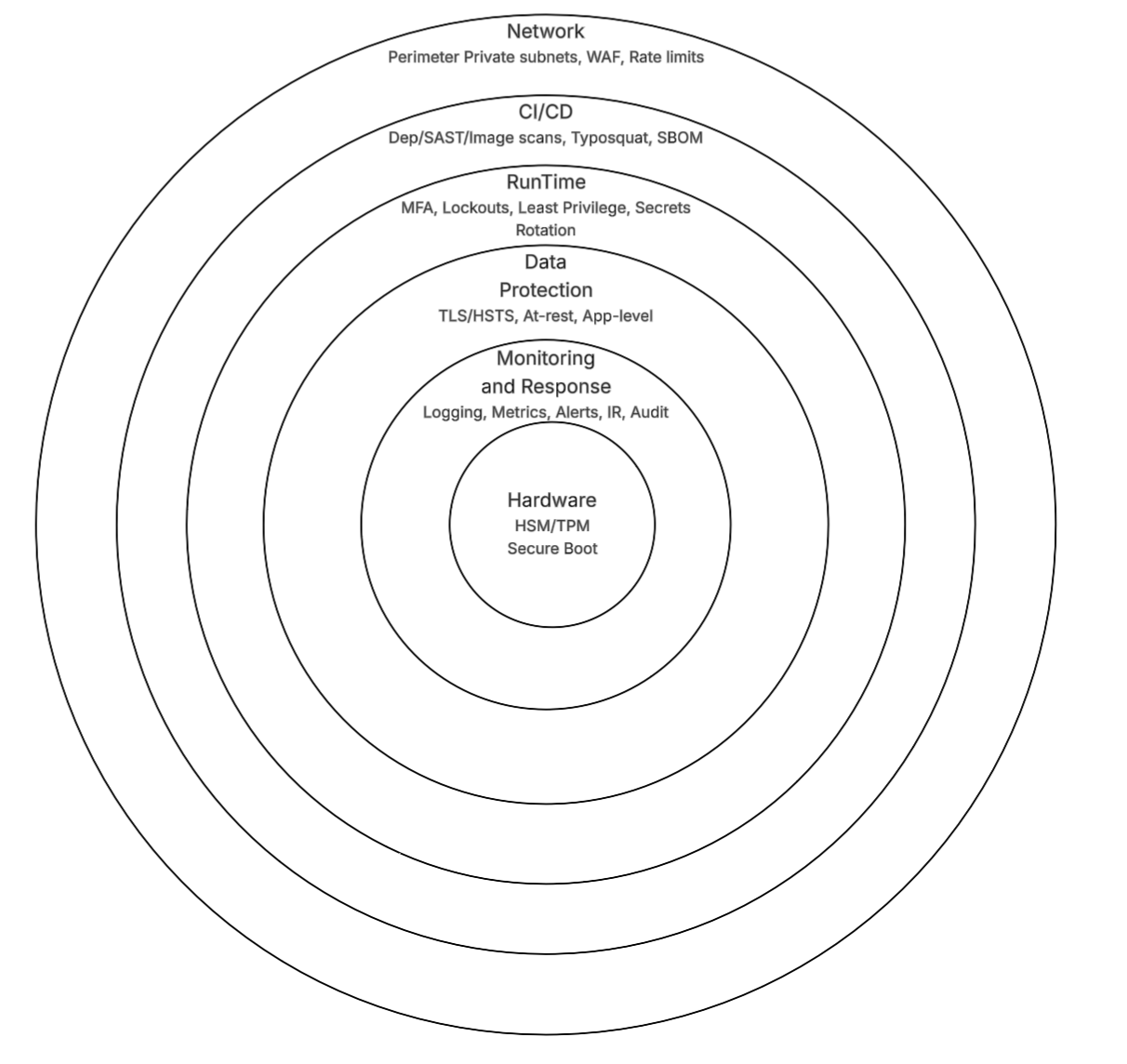
Layered security from hardware to runtime: TPM/HSM, WAF, CI/CD scanning, secrets rotation, and encryption. Practical implementation beyond HTTPS.
Mid-market companies are losing deals, failing audits, getting hammered on cyber insurance, and pitching AI roadmaps they cannot execute. MS Tech Alpine brings senior engineering leadership across four practice areas: security, AI, architecture, and CMMC. Backed by real enterprise work at JPMorgan and DENSO, plus a live revenue platform we built and operate.
Enterprise prospects send a fifty-question security review. You have no CISO to answer it. The deal sits.
The board, the sponsor, or the customers expect AI. The roadmap exists. The engineering team has not shipped a production LLM system.
You are about to pick a stack, refactor a monolith, or build a new platform. A wrong call here costs a year. You want a senior person in the room.
Insurers require documented controls, MFA enforcement, and incident response plans. Requirements you cannot meet without someone owning them.
A compliance deadline is real but you have no program in place. You need a security leader, not a policy template someone found online.
Your board, investors, or PE sponsor want to know who owns security, what the AI posture is, and where the architecture is heading. Right now no one has a good answer.
Four practices, one senior engineer running the work. Pick what fits.
Fractional CISO retainers. Security program leadership, board reporting, SOC 2 and cyber insurance prep, vendor reviews, and a senior point of contact when something happens.
AI plan and build. Pre-close diligence on AI risk, twelve-week sprints that ship production AI in portcos, and portfolio-wide platforms. Built on top of a production AI service we run today.
Architecture reviews, system design, and observability. The work for companies about to make a decision they cannot easily reverse: stack choice, monolith vs services, platform migration.
CMMC Level 1 and Level 2 readiness for Defense Industrial Base contractors. Gap assessments, SSP, POA&M, SPRS scoring, and a path to a defensible assessment.
Mid-market companies, DoD contractors, and PE-backed portfolio companies where these problems are real and current.
Your prospects send security questionnaires you cannot answer. A documented security program and a senior CISO close those deals.
Your sponsor expects AI in the next board update. The team needs a partner who has shipped production AI, not another strategy deck.
CMMC Level 1 or Level 2 is on your roadmap. You handle CUI, you have DoD contracts, and you need a security program that holds up under assessment.
Your insurer wants controls documentation, MFA evidence, and an incident response plan. This is exactly what a fractional CISO builds.
Stack picks, platform migrations, splitting a monolith, choosing cloud patterns. Decisions that lock in a year of work. You want a senior architect before, not after.
Your board, investors, or PE sponsor want to know who owns the engineering posture. Someone needs to be able to answer.
Start with a conversation
We talk through your situation: what is driving the need, what the business actually cares about, and whether this is the right fit. No pitch.
Assessment or scoping
Whatever the engagement, the first phase is always structured: where you stand today, where the gaps are, what needs to happen first. You see the lay of the land before any heavy build.
The work
Program build for a fractional CISO. Production AI for a sprint. Architecture decisions and documentation for a review. CMMC documentation and remediation. Real deliverables, fixed scope.
Ongoing or handoff
Fractional CISO and platform engagements continue monthly. Sprints, reviews, and CMMC engagements end with a clean handoff: documentation, runbooks, and a team that can carry it.
Senior engineering attention. End to end.
All engagements run directly through Jesse Edwards. No juniors, no account managers, no generic playbooks handed off after the intro call.
Built internal security tooling at JPMorgan Chase in an environment where regulatory scrutiny and real adversaries leave no margin for mistakes. Led embedded and OT security programs at DENSO, covering supply chain risk, threat modeling across every layer, and systems where safety is not optional. Founded and shipped RenovationRoute, a live platform with real payments, real users, and a production AI service running inside it.
That background is what you get in the room. Not a certification holder with a checklist.
In practice, you increase security (and AI safety, and architecture quality) by spending some combination of knowledge, time, and money.
Real lessons from building production systems.
Layered security from hardware to runtime: TPM/HSM, WAF, CI/CD scanning, secrets rotation, and encryption. Practical implementation beyond HTTPS.
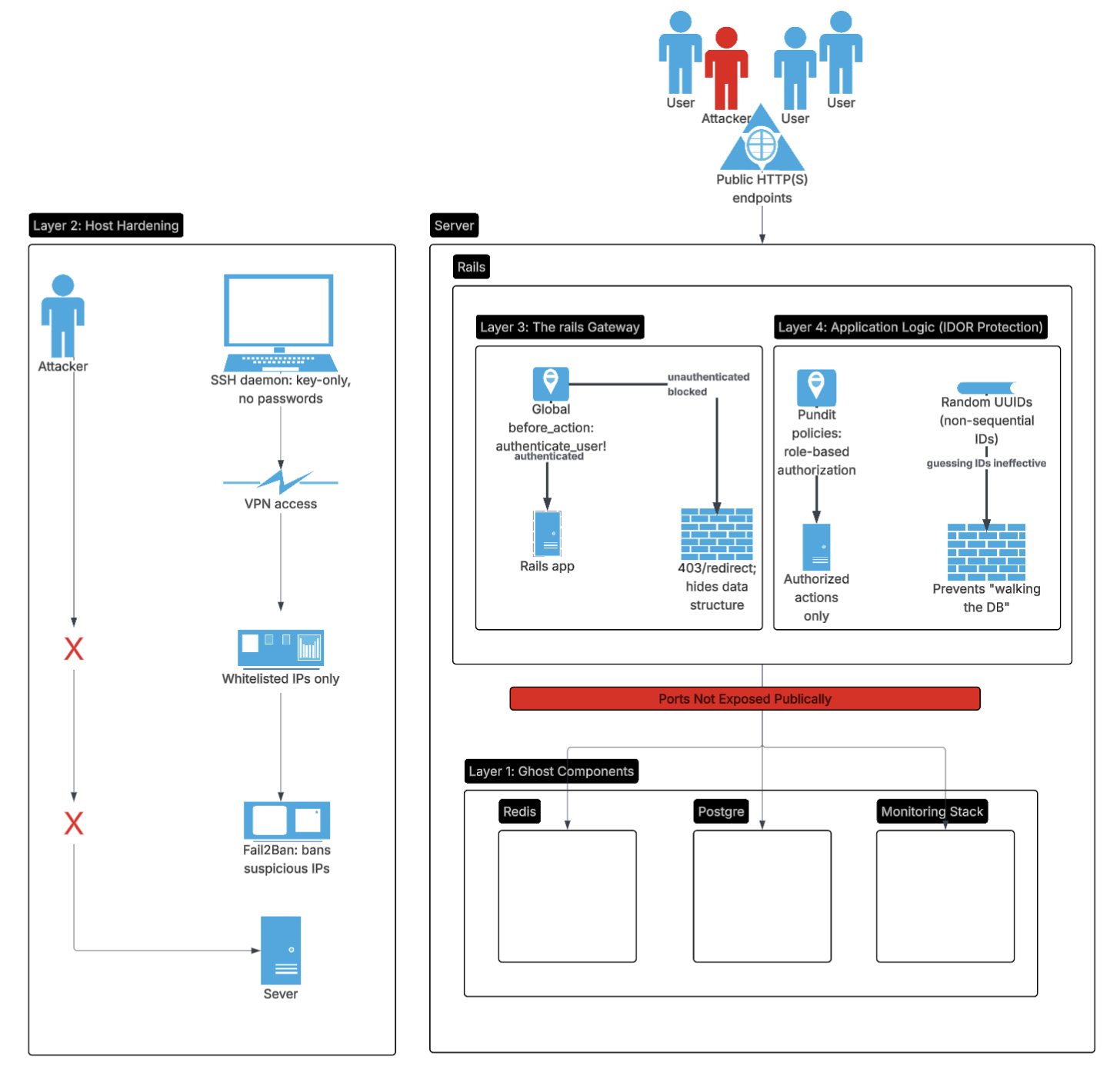
How to build professional grade security layers on a lean, single node stack using Rails and Kamal.
Mitigations for secrets handling, OAuth bypasses, dependency typosquatting, prompt injection, and more.
Security is not easy and that is why so many products get it wrong part 1.
If a deal is stalling, an audit is coming, your board is asking about AI, or you are about to make an architecture decision you cannot undo, let's talk. One conversation, no commitment.