
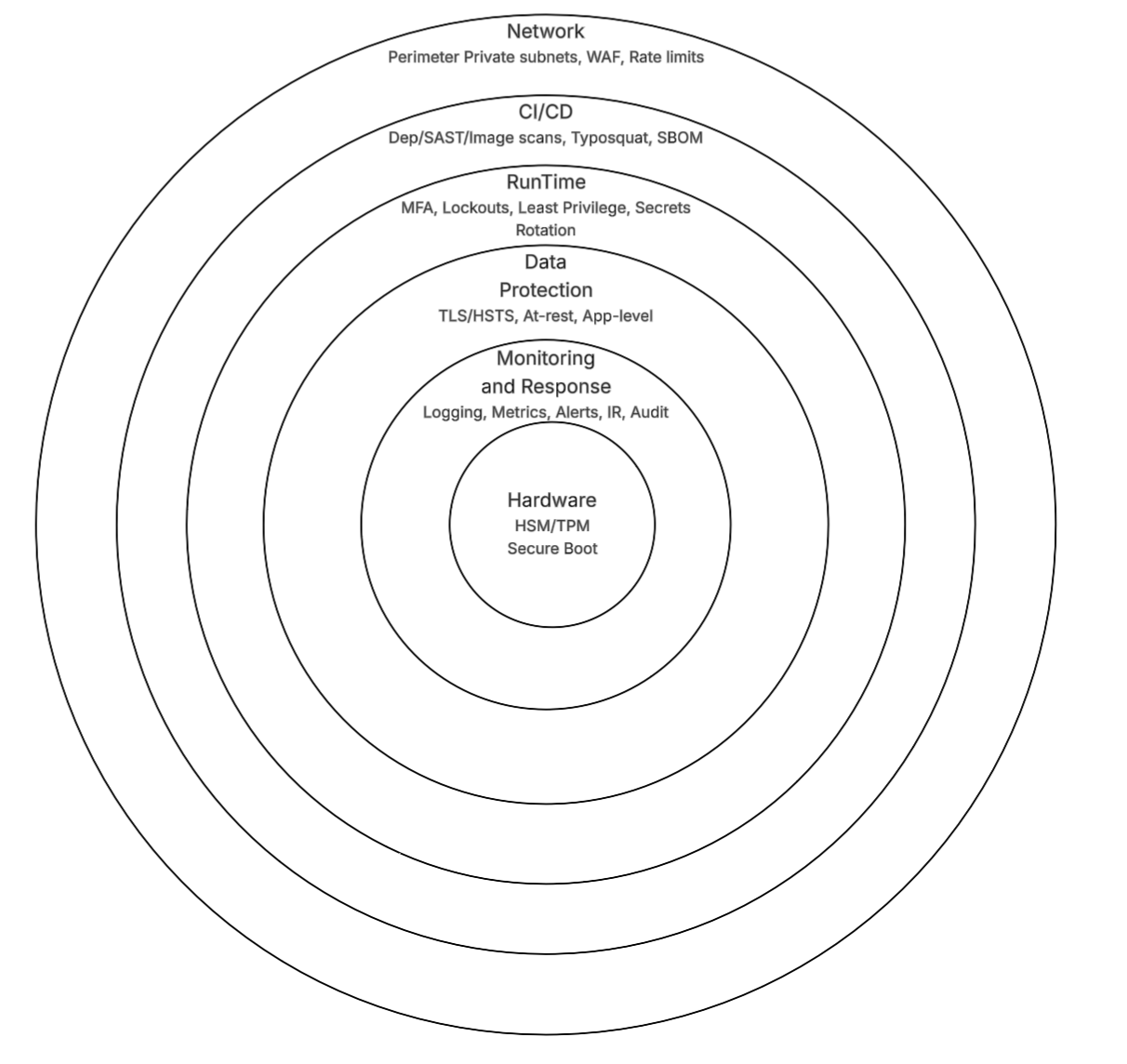
Layered Security, from Hardware to Runtime
Layered security from hardware to runtime: TPM/HSM, WAF, CI/CD scanning, secrets rotation, and encryption. Practical implementation beyond HTTPS.
Most founders and teams don't get clear guidance on architecture, security, or compliance. I help you understand what you actually need for your stage and your business.
But you do not have in-house expertise reviewing architecture, security, and critical technical decisions.
Or expensive. Or both. Nobody explains what you actually need vs. what you don't.
Scaling, hiring, compliance questions. No framework for decisions.
Built This Way
Everything else hangs off that, not the other way around. You can change direction without breaking everything.
Not retrofitted. Built into the model from day one.
One way through a workflow, not a mess of flags.
Systems fail and humans make mistakes. Plan for it and contain it.
You can answer “who did what, when, and why” without archaeology.
Designed for where it's going, not guessed at later.
Clear guidance on what to do next (and what to ignore).
What does YOUR platform actually need? There are tradeoffs. I help you understand them and make informed decisions.
What risks matter to you? What can you ignore? What comes first? No system is 100% secure, but most are insecure by default. Don't be most and have low hanging fruit ruin your companies reputation.
What would actually cost you money, users, or deals and how to reduce that risk.
MVP? Scaling? Fundraising? Different stages need different things.
Architecture shortcuts. Security gaps. No proper foundation. It's just a matter of time before it breaks, can't scale, or gets compromised.
Those letters: “Sorry, we were compromised.” Trust evaporates fast and it’s hard to win back.
Outsourcing without oversight. Do I really have to ask you how you internally feel if this is you? Moving fast without architecture. The outcome is disaster loss of reputation and customer trust.
For teams who need expert guidance. Whether you're just starting and need architecture validation, or scaling and hitting limits, I help you understand what you actually need.
Your engineer is good, but they've never built at scale. You don't know if the architecture is sound.
You need to validate decisions. Can you trust the architecture they're building?
You're scaling but hitting bottlenecks. The architecture that worked for 10 users doesn't work for 10,000.
Enterprise clients are asking questions you can't answer. SOC 2, security reviews, audit readiness.
Architecture review
Understand your system, constraints, and risks.
Get clear recommendations
Concrete guidance based on what you’re actually building.
Optional implementation support
Patterns, diagrams, and guardrails (if you want hands on help).
Knowledge transfer
You own the plan. No dependency.
Clear answers, not a 40-page slide deck.
From MVP to enterprise systems with real money and real users.
Security debt, rewrites, and compliance surprises. I have seen it all.
Enterprise environments where security is non-negotiable and founder built products where speed matters.
You work directly with the person who built it.
Architecture and security reviews performed directly by Jesse Edwards, not outsourced, no junior handoff, no generic playbooks.
Built security tools at JP Morgan Chase. Led engineering teams at DENSO. Founded and shipped RenovationRoute (real product, real revenue, real security decisions).
No bullshit. Stage-appropriate guidance. Direct access to someone who's done this at scale.
Want the full background? About me.
In practice, you increase security by spending some combination of knowledge, time, and money.
Real lessons from building production systems
Layered security from hardware to runtime: TPM/HSM, WAF, CI/CD scanning, secrets rotation, and encryption. Practical implementation beyond HTTPS.
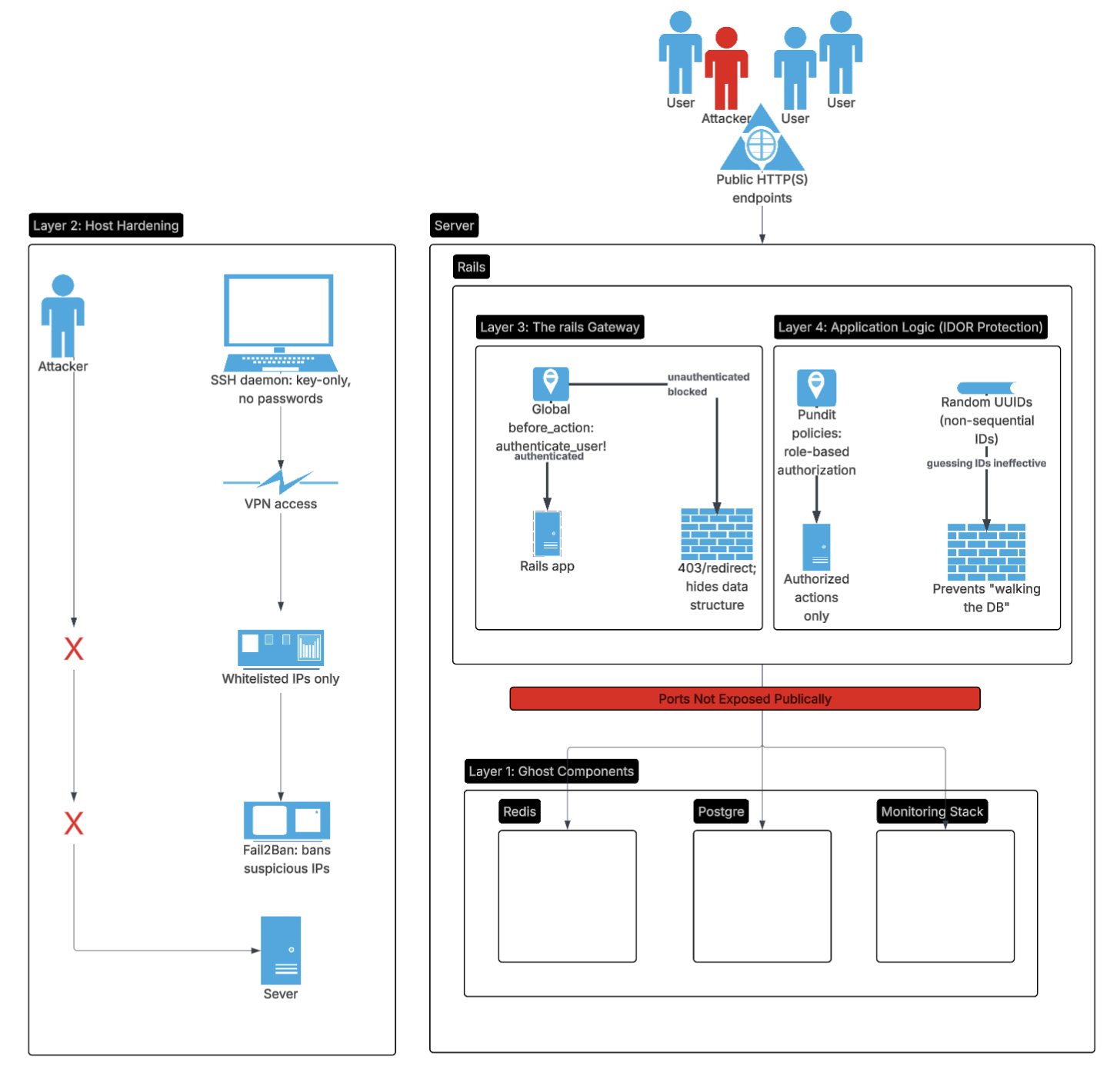
How to build professional grade security layers on a lean, single node stack using Rails and Kamal.
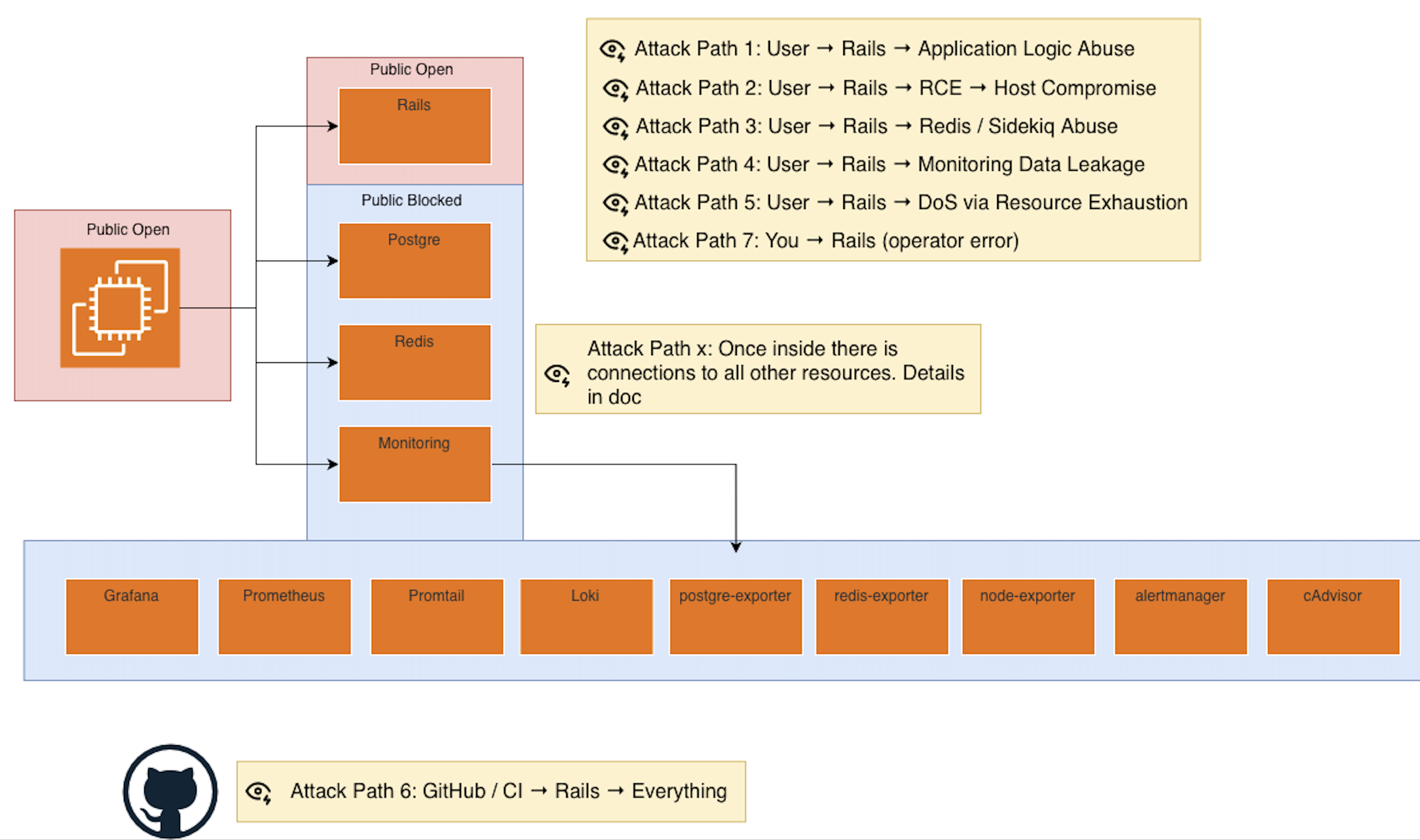
Security is not easy and that is why so many products get it wrong part 1.

Why I stuck with Rails in 2026 instead of chasing the latest frontend flavor.
Let’s talk about your platform, your stage, and what solid foundations look like.